


Starting over is one of the hardest things we face in life.
Whether it’s the end of a relationship, a career shift, or personal tragedy, it can be difficult to find your footing again. Often, it feels impossible to know where to start or how to even figure out what you want next. This is because hardship, trauma, and stress create mental burdens that affect memory, focus, and our ability to make decisions.
I know this feeling intimately.
(Listen to the audio version of this article here.)
After an almost nine-year relationship ended, I was left feeling lost and directionless. I had built a successful career and a million-dollar business, but I suddenly found myself spiraling.
For two consecutive years, my revenue dropped dramatically. I ended up in a massive amount of debt and owed back taxes. The stress was overwhelming, and I felt completely paralyzed by indecision.
This period of overthinking, stress, and financial strain left me wondering how I would ever climb out of the hole I was in, but in time I turned things around. I built a dream routine that helped me regain control of my life and start moving forward in a direction that excites me.
Here is genuinely how I did it.
Step 1: Map Out Your Dream Day
When we are overwhelmed and struggling to be productive, it’s often because we’re focused on the big picture. We worry about existential questions like:
- What am I doing with my life?
- What is my purpose?
Or we focus on negative self-perceptions:
- I’m not good enough.
- I don’t have skills or talents.
- I don’t know what to do.
- People will judge me.
The problem with this mindset is that it creates too many angles for your brain to process.
The problem feels too big and unsolvable. This leads to procrastination, avoidance, and even behaviors like endlessly scrolling your phone or binge-watching Netflix. It’s easier to avoid the problem entirely because it feels impossible to solve.
The truth is, you cannot solve life.
Life is not a math problem to be solved.
Instead, it is a painting to be created.
Every artist is different, with their own style.
And often, our mistakes, blunders, and mess ups are what make our art beautiful.
Vincent van Gogh’s Starry Night was once criticized as chaotic and overly emotional, but it became a masterpiece that captures raw human spirit.
Jackson Pollock’s drip paintings, dismissed as uncontrolled accidents, redefined modern art and turned mess into movement.
Michelangelo carved David from a flawed marble block others rejected, creating one of history’s most iconic sculptures.
Pablo Picasso’s Cubism shattered tradition with strange perspectives, revolutionizing art in the process.
These moments prove mistakes aren’t just inevitable—they’re essential. The brushstroke, drip, or flaw often defines the beauty of the final piece.
Our lives and schedules are no different.
When we stop trying to solve it, and instead embrace the mess, we can begin to see its beauty.
After all, a painting with no imperfections is sterile.
A life without mistakes is hollow.
So pick up your brush.
Make mistakes.
And create a masterpiece.
The key is to focus on something smaller and more manageable.
A smaller more measurable amount of time : a single day.
This will be your first masterpiece, mistakes and all.
Visualizing Your Dream Day
First, let’s imagine a day where you have no obligations.
- No work meetings.
- No appointments or errands.
- No family functions or social gatherings.
This is your blank slate. Start by asking yourself, What would my ideal day look like? The goal is to design a day that feels intentional, balanced, and fulfilling.
Step 2: Block Off Non-Negotiables
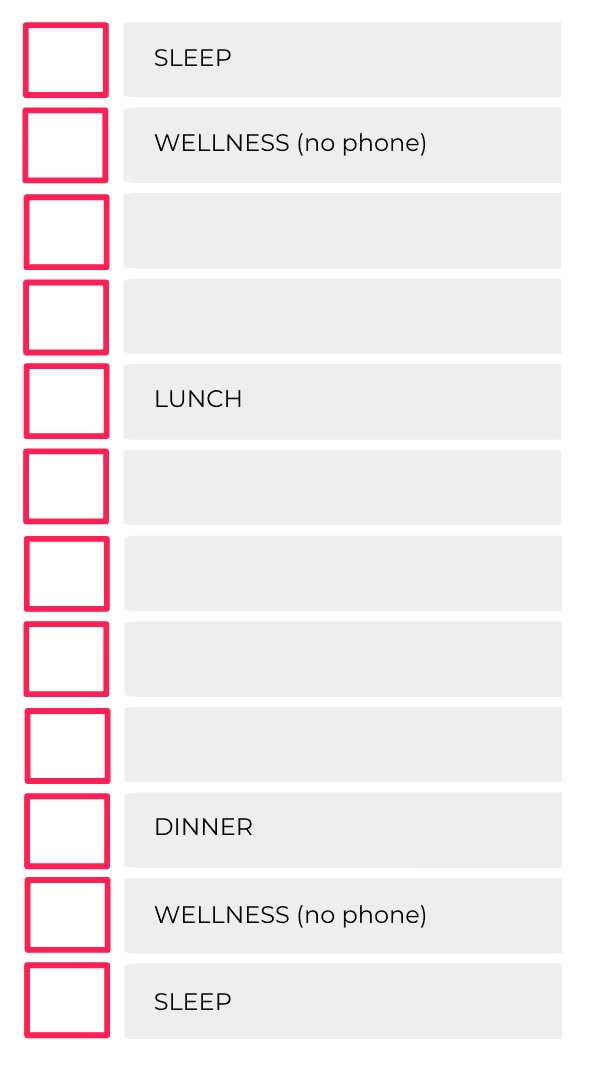
The first step in creating your dream day is to schedule your non-negotiables. These are essential activities that support your mental, physical, and emotional well-being. Start by focusing on these core areas: sleep, wellness, and meals.
In 2021 I read the book My Morning Routine by Benjamin Spall and Michael Xander and it completely revolutionized my routines.
Sleep: Block out 7–8 hours. For me, this is midnight to 8 a.m. You may have a different schedule, but consistency is key. Experiment to find what works best for you.
Wellness Hour: Dedicate time to light exercise, meditation, or journaling. Mornings and evenings are common options. Start small and build up gradually.
Morning Wellness Ideas:
- Light stretching or yoga.
- Meditation or deep breathing exercises.
- Journaling or creative writing.
Personally, I find writing to be an essential part of my mornings. Writing helps me process my thoughts, clarify my goals, and stay focused—especially when I’m going through a tough time.
Evening Wellness Ideas:
- Gratitude journaling.
- A phone call or tea with a close friend.
- A warm bath or skincare routine.
- Quiet reading time, either at home or at a local bookstore.
Meals: Plan your meals based on your energy needs. I personally have coffee for breakfast and eat lunch and dinner. Whatever your schedule, prioritize raw, nutrient-rich foods and stay hydrated. Your brain and body thrive on water.
The Importance of Avoiding Digital Distractions
One of the most crucial habits to adopt is keeping your phone out of reach during your wellness time. Many people charge their phones by their bedside or check their devices first thing in the morning. This behavior is harmful to your dopamine system—the part of your brain that drives motivation.
When we look at screens right before bed or immediately after waking, we’re depleting the dopamine our bodies work hard to replenish during sleep. This is why so many people feel unmotivated in the morning. Andrew Huberman emphasizes that bright light exposure between 11:00 p.m. and 4:00 a.m. can suppress the release of dopamine and have other negative effects like inhibiting learning and leading to forms of depression.
I watched this podcast by Huberman and it drastically changed the way I interact with my digital devices.
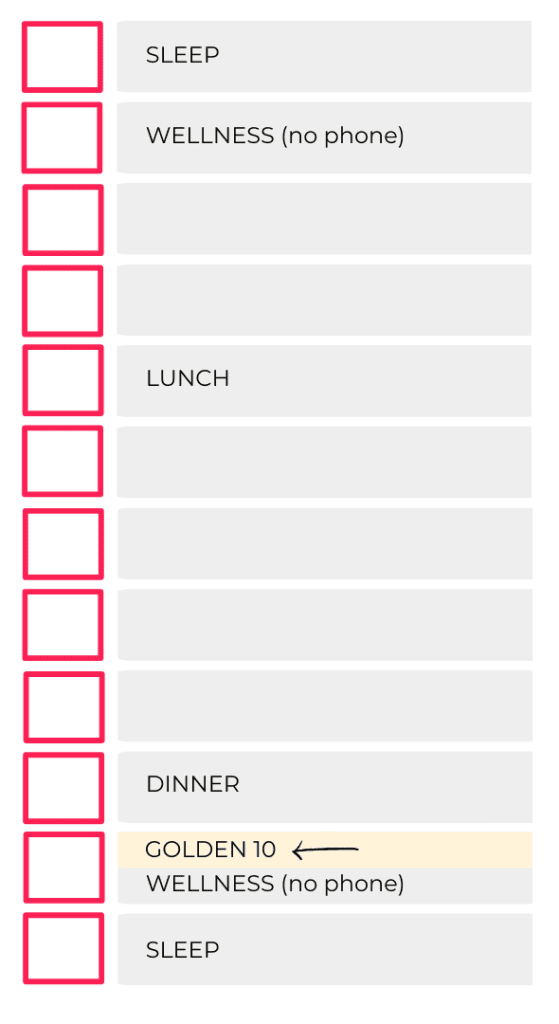
Step 3: Plan Your Golden 10
The next step in creating your dream day is what Carl Pullein calls the “Golden 10”, which is also a non-negotiable. This is a 10-minute focus session at the end of your day dedicated entirely to planning the next day.
When we’re stressed or overwhelmed, planning ahead reduces decision fatigue. It gives your brain a clear path to follow and removes the mental clutter that comes from trying to figure things out on the fly.
For me, I do this session at night and then revisit it the following morning during one of my wellness hours. In the morning, I confirm the plan I created and move major items into my focus blocks for the day.
Step 4: Prioritize Work or Personal Focus
Once you’ve set your non-negotiables and planned your Golden 10, you’ll need to decide how to use the remaining time in your day. Do you focus on work or personal pursuits? This decision will depend on your unique circumstances and goals.
Using the Fun Matrix
This concept, borrowed from Ali Abdaal, is a framework for evaluating priorities. The Fun Matrix divides tasks into four quadrants:

- High Money, High Fun: The dream quadrant, where tasks are both enjoyable and lucrative.
- High Money, Low Fun: Tasks that generate income but may not be enjoyable.
- High Fun, Low Money: Passion projects that are fulfilling but not immediately profitable.
- Low Money, Low Fun: Tasks that neither generate income nor bring enjoyment—avoid these entirely.
An Example From My Own Life
After the end of my long-term relationship and the financial hardships I faced, I had to prioritize tasks in the “High Money, Low Fun” quadrant. This meant focusing on work that stabilized my income, even if it wasn’t the most enjoyable at the time.
For example, back in April of 2024 I had to come up with over $22,000 in just 3 weeks for past due back taxes. I was working 12 hour days in order to make it happen. Luckily I was able to get it taken care of, which I talk about on my Instagram here.
The key is to recognize that this is temporary. We do what we have to do until we can do what we want to do.
Not everyone will need to focus on income first. For example, some of my mentees, like Sande and Kim, prioritized fulfillment over financial goals. Sande, a professional chiropractor with a passion for golf, decided to focus on building a fulfilling second career coaching aspiring pro golfers. Kim, a highly successful relationship therapist, shifted her focus to creating a digital cohort and growing her online presence.
Your approach will depend on your current situation and long-term vision.
Step 5: Schedule Deep Focus Hours
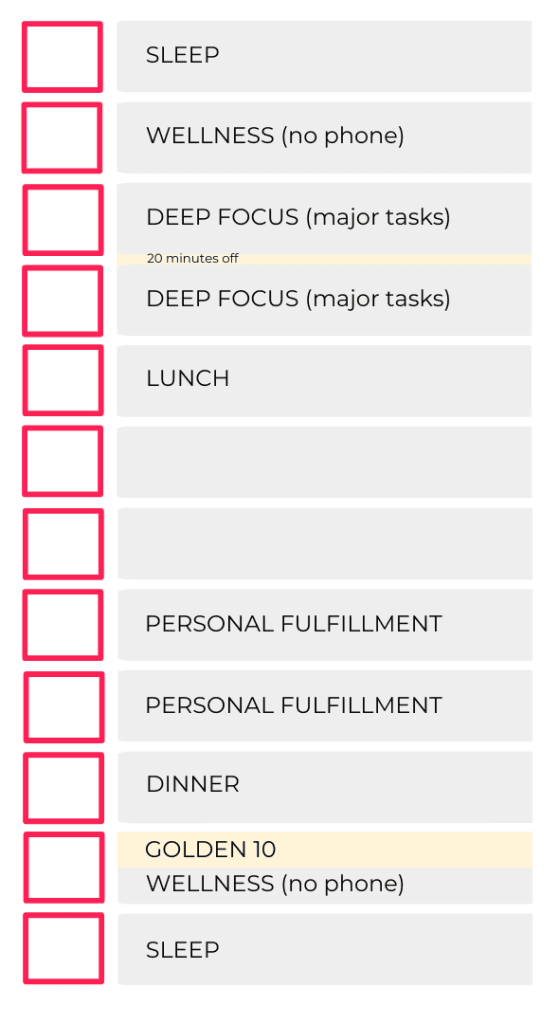
To make meaningful progress on your priorities, you need dedicated blocks of uninterrupted focus time. Our brains work best in 90-minute cycles, followed by a 20-minute break—this is known as the ultradian rhythm.
- Choose 2–3 Major Tasks Per Day:
These should be high-impact tasks that require significant mental energy, such as:- Writing an article.
- Developing a strategy for your business.
- Completing a detailed project.
- Eliminate Distractions:
During focus blocks, turn off notifications, close unnecessary tabs, and create an environment conducive to deep work. - Use Breaks Intentionally:
Between focus blocks, allow yourself 20 minutes to recharge. Personally, I use this time for “wall staring,” which is exactly what it sounds like—sitting quietly with no distractions. Other options include making tea or taking a short walk.
Too often, people create overwhelming to-do lists with 10–20 tasks. This is counterproductive because the brain can only handle 2–3 major tasks in a single day. By focusing on fewer tasks, you’ll make steady progress without succumbing to analysis paralysis.
Step 6: Build Personal Fulfillment Into Your Day
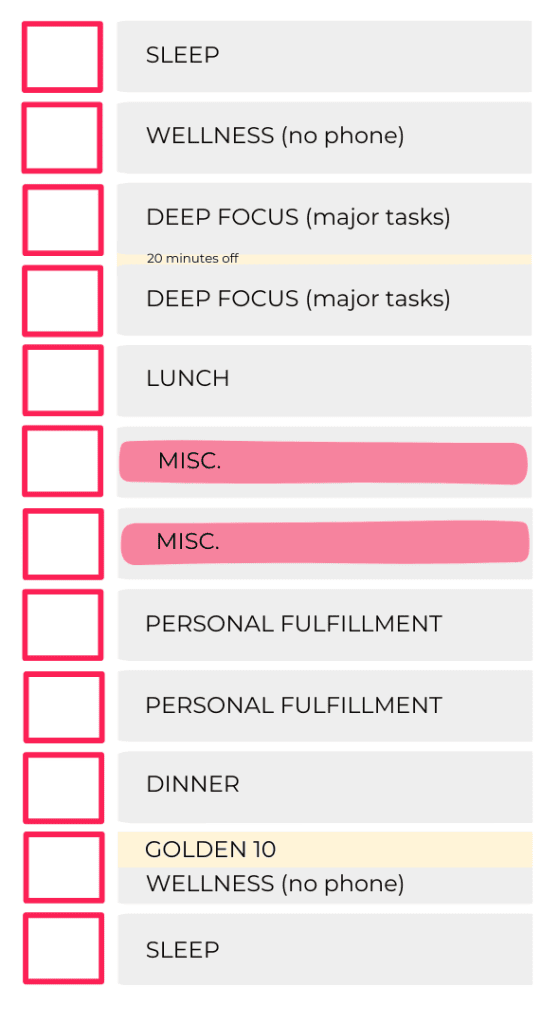
Once you’ve handled your non-negotiables and major tasks, the remaining time in your day should be dedicated to personal fulfillment. This is about recharging your energy and doing things that bring you joy.
- Hobbies: For me, cycling is more than just exercise—it’s a passion.
- Nature: Spend time outdoors by walking near a river, gardening, or hiking.
- Social Connections: Call a friend, host a small gathering, or send a heartfelt message of gratitude.
- Creativity: Explore new skills like painting, writing, or music.
The key is to focus on activities that genuinely fulfill you, rather than passive distractions like binge-watching TV or endlessly scrolling social media.
Step 7: Adopt a Productive Mindset
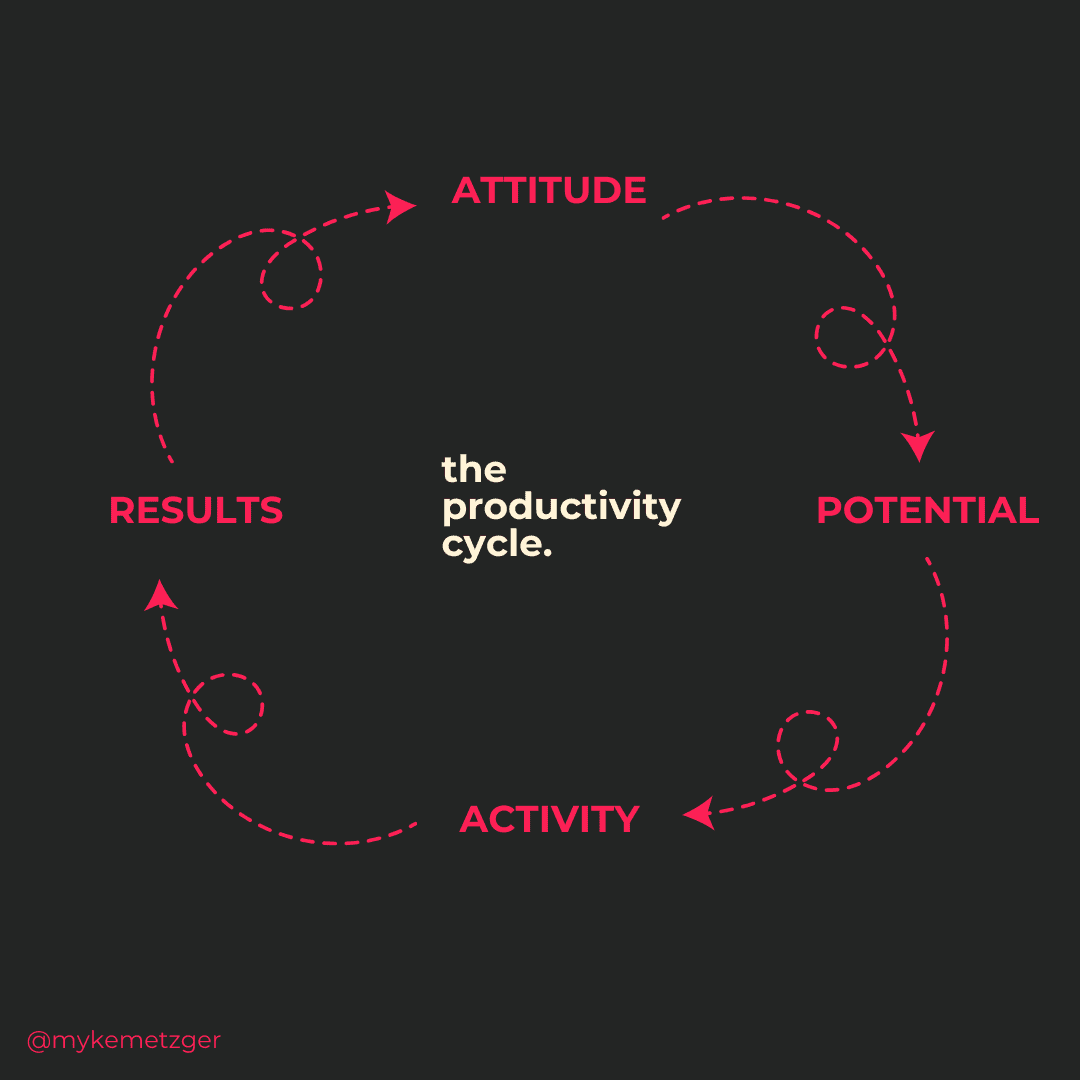
Your mindset is the foundation of everything you do. The way you approach this process determines your potential, and your potential directly impacts your results.
The Productivity CYCLE
- Attitude Shapes Potential:
If you believe this routine won’t work, you’re already limiting yourself. But if you approach it with a growth mindset, you open the door to possibilities. - Potential Drives Activity:
With the right attitude, your potential increases, which fuels productive activity. - Activity Determines Results:
Consistent, intentional action leads to meaningful results. - Results Replenish Attitude:
Good results improve and carry momentum into your ongoing attitude. This is why a great attitude from the start is key.
Even if you’re starting from a difficult place—be it financial struggles, personal loss, or a slump—remember that progress happens one step at a time. Lean into the process and trust that it will get better.
The next biggest step to this was making a promise to myself that I would stick to this daily schedule for 60 days in a row. For me, I took massive action to pull myself out of a slump. I committed to a 60-day personal challenge where I forced myself to stick to a daily checklist. In just two months, my life transformed.
I looked into popular challenges like 75 Hard and Project 50, but ultimately decided to design my own version tailored to my specific goals. It’s called Commit 60 and has now become a challenge I offer to my students as well.
I built a set of ‘Daily Targets’ that included:
- Wake Up at or Before 8 am (M-St)
- Outdoor Exposure
- Workout/Exercise (M-St)
- Reading or Audiobook
- Focused Work (2hrs M-F)
- 18 Minutes of Hobbies
- Social Interaction (M-St)
- No Alcohol
- 1 Coffee or Less
- No Porn
- 20 Push-Ups / 20 Sit-Ups
- Write daily on Threads
At first glance, this list might seem simple—but that’s intentional. The key is being realistic about your current life season and setting goals that challenge you while remaining achievable. The idea is to move forward, not backward, and simplicity makes consistency possible.
My commitment to myself was that if I missed a single day, I have to add 5 additional days to the end of the challenge timeline. This ensures that I stick to my promise and reach my goals.
Additional Tools for Transformation
For those who need additional support, I’ve created two programs designed to help you rebuild and thrive:
1. Project Resurgence
This is a group cohort focused on helping individuals reinvent themselves and build a personal brand that aligns with their passions and expertise. You’ll discover how to express your uniqueness and turn it into a fulfilling career path.
2. Commit 60
A 60-day accountability challenge designed to help you break through procrastination, perfectionism, and self-doubt. During Commit 60, you’ll have:
- An accountability partner.
- One-on-one access to me in a group setting.
- A structured plan for setting and achieving your goals.
This program is only available to alumni of the Project Resurgence cohort. It’s for those ready to push themselves and finally overcome the barriers that have been holding them back. If you’d like to get on the waitlist for Project Resurgence you can do that here.
Final Thoughts
Starting over is one of the hardest challenges we face, but it’s also one of the most transformative opportunities. By focusing on one day at a time, prioritizing what matters most, and creating a structured routine, you can rebuild a life that feels purposeful and exciting.
Remember, your dream day today might look completely different a year from now, and that’s okay. The important thing is to start. Take the first step, lean into the process, and trust that progress will follow.
Bookmark this guide and revisit it often. Your journey to starting over begins with just one intentional day.